Liz,
Sorry, I hadn't realised there were further paras than I'd published so I've rectified publishing your comments in full below-pure chance/serendipity that I stumbled upon the rest of your missive-makes me wonder if there are further comments out there that I missed.
I suspect you're most definitely the furthest travelled-I wonder what that says! I sometimes wonder what happened to Norman Stewart. Heather Swanson is in America-Florida, I think.
6/6 may be able to see the No 16 bus, but not 6/4 or 6/2.
That was a brave step you took going to the States-life changing. Departures are strange things and we often handle them awkwardly, poorly or not recognising the moment for its full worth. I tried to bring this theme out in the blog For Whom The Bell Tolls. The Scottish/Australian folk singer Eric Bogle captures this in his performance (preface/song) Leaving Nancy-if you're not familiar with it check it out.
I wasn't going to mention the topic again and it's not a competition (!), but since I'm responding-I'd met up with my mother and sister in Edinburgh on Saturday and whilst acknowledging everything you said on our fathers, we felt a key difference for us was the fear factor which was always there for us because KH was such a very intimidating individual. Anyway-don't feel obliged to respond-we've probably done that one to death!
I've enjoyed our wee chats across the globe-it would be good to keep in touch.
Best.
Peter
x
Hi Peter,
I think I remember those winters and the sledding more so than the summer. Maybe because the snow made things seem pristine, new, and fresh. It made things sparkle - a pleasant change from the dull concrete jungle that was Oxgangs.
I remember the treacherous ice slides on the pavements and the hard packed snow on the field. It was exhilarating flying down the hill on a sled. I remember using a light low sled, basically a flat 'bed' to lie or sit on with 2 short wooden runners attached. I don't think this was the sled Mr Hogg made, which I don't remember, but thinking back it seemed similarly home-made.
Anyway I was about 9 or 10 yrs and I wanted to emulate the older lads who ran with the sled and launched themselves to lie on it in motion. I unfortunately allowed the rope to trail under the sled as I ran forwards and trod on it just as I launched myself. Of course the sled stopped sharply as I continued going! As you said the hard packed snow was iron hard and my face bore the brunt, severely damaging my front teeth and taking off a layer of skin (ice burn). It was so cold I didn't feel much and felt more foolish than anything but the next day my face was a mess!I think I had a dermabrasion long before we knew what that was!
As for the trees, my how they have grown. I remember those spindly saplings which seemed to forever require propping up. But they made it to maturity forming a copse there on the hill. I wonder if we would still be able to see the No 16 bus coming down the hill?!
On an earlier topic you mentioned leaving Oxgangs in 1972 which I did also although I think it was earlier in the year. I may have been the first to go. I moved into a share house, a beautiful ground floor garden flat in the new town. I worked in Charlotte Square and so I used to walk to and from work, and later that year I went to Philadelphia in the US to work as a 'mother's help'. Now in Australia since 1988, I wonder if I am the former resident now most removed geographically from the stair? Liz Blades

Peter Hoffmann The Stair 6 OXGANGS AVENUE EDINBURGH, a blog about the everyday life of eight families living in one of the post war new council housing schemes on the south of the city set in the lea of the Pentland Hills between the years 1958 to 1972. (Since 2017 incorporating the Facebook page, OXGANGS - A PASTIME FROM TIME PAST)
Showing posts with label Field. Show all posts
Showing posts with label Field. Show all posts
Tuesday, 8 January 2013

Sunday, 30 December 2012
The Field In Winter and the Last of the Mohicans

I've alluded to The Field on several occasions over the months.
It served all the kids at The Stair well as a playground over the four seasons of the year.
And although we at the four stairs at 2, 4, 6 and 8 Oxgangs Avenue saw it as our personal fiefdom it actually also represented a neutral point in the community which drew in others from Oxgangs Street and also across Oxgangs Road North including children and teenagers from Oxgangs Farm Drive.
In the main this was to play football - occasionally someone would fly a kite and for one summer we actually played some cricket!
This was courtesy of Norman Stewart who had received the cricket set from his grandparents for a birthday.
It was actually good fun.
For Norman it was a game he could play and compete on a level playing ground so to speak as he didn't play much football.

These were all mainly boys orientated, but the one game which was gender neutral and all the better for it was the games of rounders that both girls and boys participated in. Rounders were great fun and normally no team was in for too long which kept the interest going.
From around 1966 onwards the annual bonfires that used to be held in the wee field directly out the back of The Stair were deemed by the Fire Brigade and Edinburgh Corporation as being far too close to us all as it indeed they were; certainly the Blades, the Hoggs and the Hoffmanns didn't need a fire on bonfire night such was the heat that emanated toward the Stair. At least the Swansons, the Stewarts and the Smiths were on the wrong or should that be the right side of the bonfire; whereas the Duffys and the Hanlons were a bit safer on the top landing.
Where the field really came alive however was when the snows of winter came. It was then that The Field truly came into its own.
The ground may have been frozen hard as iron and to all extents dead, but it was alive with children and young people both girls and boys.
What a sight it was to behold - a carpet of white adorned with well wrapped up stick like figures, some quite colourful, but more likely inside the dark blue nylon anoraks or duffel coats that many of us wore at that time, starkly contrasted against the landscape, black on white, the scenario was straight out of a Lowrie painting.
And then when dusk came and the night fell and the street-lights on Oxgangs Road North slowly began to flicker on and the dancing headlamps of the cars and buses carrying the workers home, watchers by the threshold could catch happy flitting figures dancing across the white landscape of The Field.

Dozens of sledges of different sizes would come down the hill.
The more adventurous ones had polished up the runners so that the sledge flew; others were much more apprehensive and went down with their feet hanging over either side. The more daring would aim to both extend the length of the run by skilfully manoeuvring through the gap in the fence and fly into the drying green; some were even full hardy enough to fly over the steps too coming down to rest adjacent to our back garden at 6/2!
As mentioned on a profile of Douglas Blades the Blades family enjoyed using the big sledge that Mr George Hogg had built; and Norman Stewart had the classiest sledge in the district The Flying Dutchman.

Gavin and Heather Swanson had sledges but were quite conservative on the slope.
The Ramage twins, Les and Derek from 4/3 had nice light sledges.
I don't recall the Hanlons having sledges.
The Hoffmanns didn't have sledges, although Iain may have used an old beer tray that our father, Mr Ken Hoffmann possibly brought home from a pub, but essentially we never owned a sledge so we became boarders instead - not always popular with many sledgers because we would await for a passing sledge to come by and then try to run alongside and dive on board it; those individuals who were lying on their stomach on the sledge were particularly prone to being dived upon or sat upon.
Of course we were not always successful and often ended up missing the sledge or falling off or indeed bringing the owner off too - still great fun ending up rolling in the snow!

We'd play outside for hours until we became too cold, too wet or we were called in and then we'd head for home chittering as our mothers pulled off our wet clothes that had stuck to our backs and we'd hop around as we encouraged others to pull off our Wellington boots. The drying cupboard in the sitting room would be chock-full of clothes and our Wellington boots would be lined up like soldiers in front of the coal fire to dry out
Just before coming in we'd have made sure we'd taken part in one of the other fun rituals of playing at The Field - throwing snowballs at the slow moving vehicles going up the gauntlet of Oxgangs Road North.
We mainly chose the buses as they were large slow moving targets with as many as a dozen of us lined up and at a given call an array of snowballs would be fired at the bus windows.
It must have pissed the passengers off no end - it was like medieval warfare in the dark midwinter as many as twenty snowballs flew through the air and bombarded and thudded against the windows of the bus.

Once home and inside and
later into the evening I would occasionally glance out from our living room
window and look out to The Field.
It had become quieter; numbers had dwindled as children made their weary way home, until there might be only a solitary figure left, sledging downhill; of a sudden the last sledge run would take place and The Field became eerily silent.
It had become quieter; numbers had dwindled as children made their weary way home, until there might be only a solitary figure left, sledging downhill; of a sudden the last sledge run would take place and The Field became eerily silent.
The only figures there are the trees which were planted many decades ago and somehow thrived and of course the ghosts of the Hanlons; the Duffys; the Blades'; the Hoggs; Norman Stewart; the Swansons; and the Hoffmanns and all the hundreds of other children from all those decades ago.
I wonder what child was the very last sledger?

Saturday, 29 December 2012
School Summer Holidays
Many books which recall childhood and youth remember the school
holidays as a time filled with sunshine-literally and metaphorically-I'm no
different. It was always a delicious moment awakening on the first few days
knowing that I didn't need to attend school.
For many of us at The Stair-those of us in our teens it didn't mean a long lie in bed as we would always have a job on the go, either delivering milk or newspapers-usually the latter. However, out-with our paper runs and Sundays when we visited our grandparents at Portobello, there was no structure to each day. Games of football would occur spontaneously, but mainly in the early evening. During the day we’d go jumping the burn, following the burn from the lower part of Redford, through Colinton Mains, Firhill and on to Braid Burn Valley.
Small villages would appear at the back field when the girls draped blankets on the fence to form tents. Sometimes families packed a picnic and some blankets and headed to Braid Burn Valley for an outing. We’d go far into the Valley toward the grass steps-an outing wasn't an outing without the children rolling over and over down steps from the top to the bottom. The picnic wouldn't include anything more than a sandwich.

For many of us at The Stair-those of us in our teens it didn't mean a long lie in bed as we would always have a job on the go, either delivering milk or newspapers-usually the latter. However, out-with our paper runs and Sundays when we visited our grandparents at Portobello, there was no structure to each day. Games of football would occur spontaneously, but mainly in the early evening. During the day we’d go jumping the burn, following the burn from the lower part of Redford, through Colinton Mains, Firhill and on to Braid Burn Valley.
Small villages would appear at the back field when the girls draped blankets on the fence to form tents. Sometimes families packed a picnic and some blankets and headed to Braid Burn Valley for an outing. We’d go far into the Valley toward the grass steps-an outing wasn't an outing without the children rolling over and over down steps from the top to the bottom. The picnic wouldn't include anything more than a sandwich.


As we got a little older there were other adventures to be sought out-Happy Valley at Craiglockhart; the Craiglockhart Hills and the Pentland Hills too. Once deep into the Pentlands apart from the occasional plane overhead, we had entered a different kingdom-it was a world where the air was fresh, light zephyrs blew through the long grass-sheep grazed in parts-birds flitted through the air-Stevenson wrote of the whoop of the curlews and they continue there to this day. On a visit to Swanston last autumn I ventured there for old times' sake and watched them float on the breeze.

The Craiglockhart Hills are a delightful small set of hills just a
fifteen minute walk from Oxgangs across the Colinton Mains Park sports fields and the burn. As with the Pentlands we only visited
these hills during the summer months-although in later decades Alison and I used to visit the Merchants Golf Course when the winter snows were there-indeed she was the most exuberant sledger there when around seven months pregnant with Atticus much to her sister's and my concern!

And as with the Pentlands I always felt a certain sense of apprehension and excitement when I ventured to The Craigies, because they always felt both familiar and unfamiliar-this was because we would only visit them once or twice each summer. Part of the excitement of the Craiglockhart Hills was that we (always visited as a group) might bump into other older, bigger boys who could be menacing and second the grounds men who looked after the Merchants Golf Course who often spotted us when they were out on their tractors. They would chase us away-this gave us a real frisson of excitement. On the blind par three third hole we'd sprint on to the green, place a golfer's ball in the cup as if they'd achieved a hole in one and then hide in the woods. The golfer would search all around for his golf ball before taking a desultory glance in the cup followed by a merry jig!
Another memory was the hypnotic effect I felt whilst standing high up on the top of one of the hills, quite close to the edge, and looking down at the long grass on the valley floor which was gently swaying in the wind-I thought how easy it might be to be drawn over the edge such was the effect.

It was great fun being up on the Craiglockhart Hills because it would have been a sunny day which had attracted us up there-and sitting up high, on the dry ground, with the grass gently swaying and the sun beating down, looking over 360 degree views enabled us to take in the panoramic view and enjoy everything that is wonderful about the city. The whole of Edinburgh was laid out before us and being a clear day we could see clear across the River Forth and to the north and the Highlands; turning around we could look to the Pentland Hills and to the south.

As a boy I was getting my bearings, locating and fixing the world-it was a moment of meditation and contemplation.
And as with the Pentlands I always felt a certain sense of apprehension and excitement when I ventured to The Craigies, because they always felt both familiar and unfamiliar-this was because we would only visit them once or twice each summer. Part of the excitement of the Craiglockhart Hills was that we (always visited as a group) might bump into other older, bigger boys who could be menacing and second the grounds men who looked after the Merchants Golf Course who often spotted us when they were out on their tractors. They would chase us away-this gave us a real frisson of excitement. On the blind par three third hole we'd sprint on to the green, place a golfer's ball in the cup as if they'd achieved a hole in one and then hide in the woods. The golfer would search all around for his golf ball before taking a desultory glance in the cup followed by a merry jig!
Another memory was the hypnotic effect I felt whilst standing high up on the top of one of the hills, quite close to the edge, and looking down at the long grass on the valley floor which was gently swaying in the wind-I thought how easy it might be to be drawn over the edge such was the effect.
It was great fun being up on the Craiglockhart Hills because it would have been a sunny day which had attracted us up there-and sitting up high, on the dry ground, with the grass gently swaying and the sun beating down, looking over 360 degree views enabled us to take in the panoramic view and enjoy everything that is wonderful about the city. The whole of Edinburgh was laid out before us and being a clear day we could see clear across the River Forth and to the north and the Highlands; turning around we could look to the Pentland Hills and to the south.
As a boy I was getting my bearings, locating and fixing the world-it was a moment of meditation and contemplation.
Monday, 15 October 2012
First and Last Times

In his wonderful Diaries, Alan Clark mentions the importance of first and last times by recognising, acknowledging and celebrating the occasion - going out with style.That's of course fine
if you know it's going to be your last time - more often
than not one is unaware or so in the
moment, there is an inability to step back from the experience and recognise it as such.
Like most of the
other boys at
Oxgangs, football was my
sport - the beautiful
game. I loved
the games of football
which
we
played endlessly and gave my all
in every match.
A lot of the time I played
up in The Field - often
three games of an
evening - with
the big boys; then
the bigger boys;
and then with boys my own age.
 |
'Don't Know How The Trees Survived!'
Back Field Oxgangs Road North
|

Some fine players featured
in these games at
Oxgangs who thereafter went
on to play professionally for the likes of Hearts, including
Eric Carruthers.
However, one player was metaphorically, if not
literally, head and
shoulders
above the rest. He was a class apart.
His
name was Titch Macmillan. He
was a quite brilliant player.
He was skilful as Messi. I loved watching
him on the ball.
He was a supreme
artist, poetry in motion.
His younger brother, Rab McMillan, who
was
a couple of years older than me, wasn't that
far behind Tich.
Tich didn't make it to
the same high level
as
Eric Carruthers, probably because they thought him too small. He
may have gone on
to play in Australia at
a semi-professional level.
Some people thought he
was perhaps
too greedy on the ball
- there's a happy
balance between
being
an individualist and doing the right thing
by the team. Titch was the perfect
size for today's Barcelona team.
Physically he was a doppelganger for Messi
in size, skill and appearance.
I never felt
envious of Tich.
Because he
was
four years older he
was
somebody who I could aspire to
and try to match one
day. Also, I took consolation that I could already out-run
all the older boys.
When I played
with the older boys it
always lifted my
game. I loved the
challenge of playing
with and against
them and
trying to
take the ball past
their defence or to show some
vision with a nicely
weighted pass.
Playing with Andy as my captain facilitated this
approach and gave me
the confidence to try things and
express myself.
He complimented me when it worked and if on occasion it
didn't quite come off, he didn't
criticise me.
It was the carrot rather than the
stick approach to management - admirable and mature given that Andy would have been
only around sixteen years old.
At the age of twelve I went to
Boroughmuir
Secondary School where there
was
no football, so
instead I played rugby for the school. This pleased
my father. From 1968,
apart from occasionally playing
for
Michael Hanlon's teams in
their
matches against
a Joe Rendall Select or a Kenny Taylor Select I
gave up football altogether. I only resumed
playing
again
in my forties and
fifties with colleagues at work and
more
recently with Atticus and
d’Artagnan.
Looking back I should
have stuck with the
footie.
Postscript: I’m pleased
to say that my youthful assessment of George Tich
McMillan’s skills were not
far off the mark as he went on to
become a legend in Australian football,
including scoring against Manchester United in a friendly
and the winning
goal in a sensational
victory by Western
Australia
against Glasgow
Rangers in 1975.
Saturday, 25 August 2012
A Village Springs Up Overnight and the Never-ending Circle of Life

Cosmetically, a little worn and neglected, 6 Oxgangs Avenue still looks okay today almost sixty years on since it would have been built. Building work must have commenced around the year I was born, 1956. I don’t know what the expected lifespan of these buildings was as they weren’t built of the fine old sandstone of the Victorian or Edwardian flats at Morningside, Bruntsfield and Marchmont.
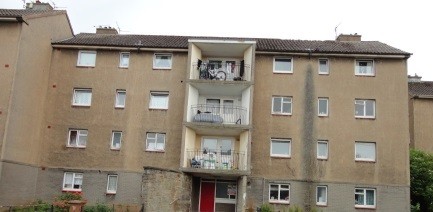

 |
| Oxgangs Street (Gazetteer for Scotland) |
 |
| Oxgangs Park |
 |
| 'Prefabs' at Oxgangs Avenue - photo taken by Douglas Blades 6/6 Oxgangs Avenue from his balcony - rather wonderful that Douglas captured this moment in time - perhaps the only record of this significant change to Oxgangs |
 |
| Prefabricated House in Edinburgh (Photo by Ron Ross, Ontario, Canada) |

Directly behind our block was a small enclosed field, only used for bonfires. Behind this field lay an area of park land where we played hundreds if not thousands of games of football. Children can no longer play football there as the young trees which were planted in the 1970s have thrived and grown. I'm unsure how they ever survived local children' attentions. It actually looks very pleasant, but is an atypical example of a lack of communication with the residents - removing a leisure asset and replacing it with something else - Big Brother knows best.
The field, now small wood, forms a boundary between the road and the five rows of two blocks of identical flats on the other side, which are approached from Oxgangs Street. Thus, there were fourteen identical blocks of flats with eight families in each, making for a grand total of one hundred and twelve families - probably around four hundred people - the size of a village, who all arrived around the same time - the late 1950s, to begin a new chapter, forming new friendships, growing up, living together - many of whom will have spent their whole life there and are still there today; others who will have died there and the many others who left and moved away as they approached and reached adulthood to begin a new life for themselves - the never-ending circle of life..
Subscribe to:
Posts (Atom)