Comments

'And finally, not everyone’s being doing topical. In fact, here’s the rather lovely 6 Oxgangs Avenue devoted to the history of the development of the area, this week highlighting how the block of flats came into being. Could have been prompted by Who do you think you are? Or just a timely reminder that not everything worth blogging about is in the here and now.'

Kate Higgins, Scottish Roundup 26/08/2012


Showing posts with label Hilda Hanlon. Show all posts

Monday, 17 November 2014

The Birth of The Stair and A Christmas Carol

Birth: 'the coming into existence of something'.


In the bleak mid-winter, Dickens' Christmas stories give the reader images of hope and light; warmth and joy; as well as transformation and resurrection. However, the light is tempered by the darkness and cold too which makes it even more life enhancing. 

The hope comes from spring, surely following winter and the renewal of life as Scrooge is restored to the good values of his boyhood and youth. 

Six decades ago in the deep mid-winter of 1958, the Hanlon family moved into the newly built Edinburgh Corporation flats at 6 Oxgangs Avenue to take up residence at ‘The Stair’; Charlie and Hilda were full of hope at the beginning of the exciting adventure ahead and novelty of bringing up their family in a new home.

Like the other young families at ‘The Stair’ they had their dreams and aspirations of the good life and raising their children as well as they could, with all the fun, joys and worries inherent.

At this time, only Michael, the eldest brother had been born; he would only have been around one year old; Brian, Colin and Alan would come along in the following years.

When the family took up their tenancy at 6/7, like the other seven families in residence at ‘The Stair’, they were issued with a rent book. It records their rent as being eighteen shillings a week.


Most remarkably, Hilda, the last remaining original member at ‘The Stair’, still has the family's first rent book. It records their date of entry as 15th December, 1958.


In a way the document records the birth of ‘The Stair’, when one of the original inhabitants first took up residence there and is perhaps a unique document of its type. 


Brian speaks humorously about the family's first experience. Hilda recalled the Hoffmann family had already moved in downstairs to 6/2 slightly earlier. The coal-man was delivering coal to our family - Ken and Anne Hoffmann, the author (Peter aged two) and my brother, Iain (aged only a month).

Hilda wanted to buy some coal in too, to heat their new home. However, the coal merchant turned down her request as she lived on the top floor and he mustn't have fancied walking up another three flights of stairs. Given it was mid-winter and Michael, the eldest brother was still only a baby, the stone-hearted coal-man clearly wasn't full of the Christmas spirit.


He reminds me of Ebenezer Scrooge to Bob Cratchit, that '...there will be no coal burned in this office today...'  

Hilda must have found a way forward, not only to heat their new top flat home with its fantastic views to the hills and the sea, as well as the prominent Edinburgh Castle, as she and Charlie went on to successfully raise their four boys in a happy household, throughout the decades of the 1960s and 1970s. 

'Edinburgh in Snow' William Crozier


Spring and indeed summer followed winter. 

Saturday, 8 December 2012

For Whom The Bell Tolls


Perchance he for whom this bell tolls may be so ill, as that he knows not it tolls for him; and perchance I may think myself so much better than I am, as that they who are about me, and see my state, may have caused it to toll for me, and I know not that.
 John Donne (1572-1631), Devotions Upon Emergent Occasions, Meditation XVII: Nunc Lento Sonitu Dicunt, Morieris: 


School life at Hunters Tryst generally followed the rhythm of the seasons and moved seamlessly from autumn through winter and spring before we broke up for the magically long summer holidays which in my mind’s eye were always blissfully sunny.The days had a certain pattern too. 


Come the dreaded Monday morning we dragged our feet from home to school. As we made our way along Oxgangs Park the bin men were usually out collecting bins. For some reason it introduced a little excitement. The bin men were always animated and loud and the air was full of dust from the ashes of the cleared fires, but I don’t recall anything ever happening, apart from an occasional car being delayed.


The snows of winter led to some excellent slides being formed on the downhill pavement outside the school entrance at Oxgangs Rise. The slides became so fast and treacherous that neighbours would eventually melt them with a liberal dose of Saxa Salt. The container had a child chasing a hen, with the slogan, See how it runs! And then it was Christmas and a New Year; a new term and learning the poetry of Robert Burns for Burns Day.


As we moved into the spring and after Easter the mornings became warmer and warmer and the scent of hawthorn and whin could be caught on the breeze and the cherry trees came into blossom. It was always a lovely feeling going to school in just a short sleeved top, not to mention the ever present short trousers. 
Sometimes it was a different smell that greeted us on the return journey if Mr McQueen (Catherine's dad) a keen gardener at Oxgangs Park had taken a fresh delivery of farmyard manure for his large vegetable garden. I was always impressed at him doing this as no one else in the community did so; it struck me that he must be more knowledgeable and go ahead than any other local gardener. I liked too that an aspect of the countryside was brought to urban, concrete Oxgangs, albeit a smelly one!

Coming home from school in the afternoon had a very different feel. It was often lighter; always warmer; and you were free, even if it was only for an hour of leisure time. The afternoon departures were both more intense and crowded, with everyone trying to squeeze out together at the same time from the narrow lane exit. Once out into Oxgangs Rise the crowds dispersed quickly unless there were the cries of fight...fight... when a circular crowd would gather. Too often I found myself inside the ring!

Old entrance to Hunters Tryst Primary School
The days followed a pattern which was comforting. When something different happened to interrupt the general cycle of the school year it was always an exciting moment; particularly if it was unexpected. Sometimes we would get away early if the weather took a bad turn, perhaps after a very heavy downpour of rain or a deep fall of snow. Once or twice there was an occasional power cut - getting away early from school was always good news. Other variations in the year would include Harvest Festival and the School Sports Day when we enjoyed a half day.


Hunters Tryst Primary School class 1961-1968

It was school which was the vehicle that brought us all together - to laugh, cry, fight, play, learn and get up to adventures and misadventures - the glue which held us together; and the place where we interacted with teachers who taught us and from whom we learned and with whom we had grown up and who were an integral part of our lives.

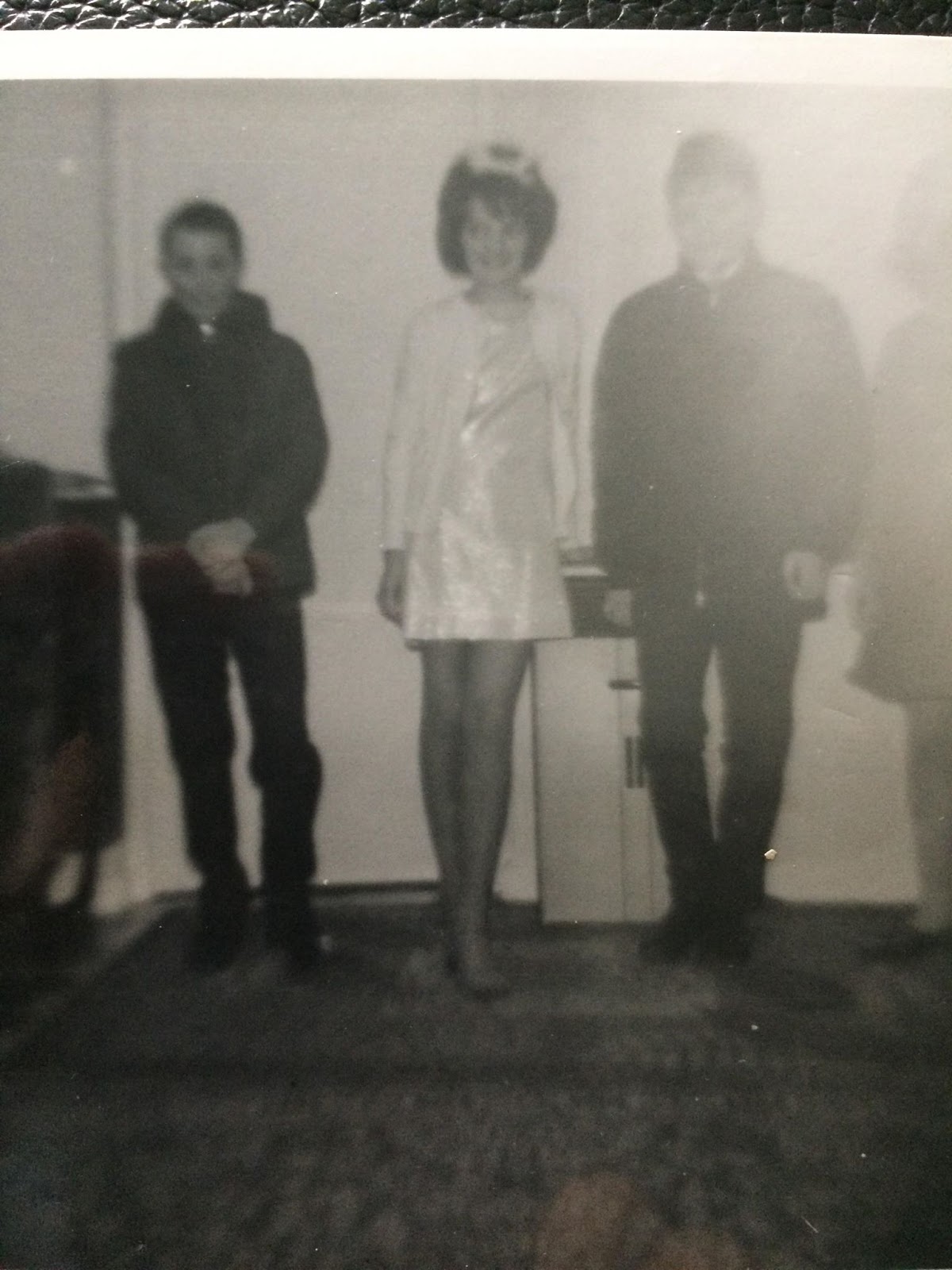
Left to right, Peter Hoffmann and Joyce Colbron heading off for the 1968 Hunters Tryst Qualifying Dance; possibly John McDonaugh on the right

As the term drew to a close there was the excitement of The Quali and then come that last week of June, when the school bell rings out for the last time, for those in Primary 7 the world comes to an abrupt end and a new beginning. It happens in the blink of an eye, like a guillotine coming down hard and quick - a brutal act. And we're all knowing, but unknowing. It sounds like a normal bell but in reality and borrowing from Donne is more akin to a funeral bell, signifying the end of school life at Hunters Tryst and the end of the inter-connectedness of social life there. We spend days, weeks, months and years sharing a life together and then it's all over and we go our separate ways.


Similarly, it was The Stair which brought us all together, but unlike life at Hunters Tryst, The Stair as we knew it died a slow, insidious death rather than the cold, clean sounding of a bell. And as mentioned in one of the very early vignettes, The Gap In The Curtain, because The Stair is still there, in a strange way we feel that if we enter through the front door of Number 6, that we can pass seamlessly through to another dimension, to another world, to the world of the 1960s, which of course no longer exists. 


Today, Mrs Hilda Hanlon (6/7) is the last remaining original member at The Stair The Last of the Mohicans. For the rest of us, we went off in a new direction, to establish new rhythms, new patterns, and new friendships, blissfully unaware that for all the children in our class and at The Stair, when the bell rang out, it rang out for us all. Even for those of us who didn't hear it - it sounded out for the end of an era.

Friday, 7 December 2012

There Is A Time For Everything


There is a time for everything, and a season for every activity under heaven:
a time to be born and a time to die,
a time to plant and a time to uproot,
a time to kill and a time to heal,
a time to tear down and a time to build,
a time to weep and a time to laugh,
a time to mourn and a time to dance,
a time to scatter stones and a time to gather them,
a time to embrace and a time to refrain,
a time to search and a time to give up,
a time to keep and a time to throw away,
a time to tear and a time to mend,
a time to be silent and a time to speak,
a time to love and a time to hate,
a time for war and a time for peace.

(Ecclesiastes 3:1-8)


I thought I'd give followers of The Stair a wee heads up that I intend to bring the Blog to an end on the 30 December, 2012. 

I feel there's a nice synchronisation to this. By then I'll have written about 75,000 words which I intend to marshal and edit slightly into a purely print version. When I've done this if anyone would like a copy please let me know and I'll be delighted to forward you a download.

I could continue well into the future in a similar vein, but I've always been a big fan of David Daiches lovely book Two Worlds set in Edinburgh in the 1920s and 1930s. It's approximately 70,000 words long and I think it's a good model.

I've still got much to write about so will have to prioritise what goes in and what stays out over the next three weeks or so. If there is anything that any reader would like to see featured or edited or mistakes rectified then please let me know.

Also is there anyone missing who really should be included? Of the themes covered are there any glaring gaps? My approach has been to do little vignettes whereby key themes have ebbed and flowed throughout the Blog-particularly work, life and play, with sub themes of class; economics; health and well-being; education; rights and wrongs; etc. as displayed through the quirks of the way we all behaved or situations we got ourselves into.

I'm concious for example that there has been little if anything on boy/girl romances and relationships; love and sex; also religion hasn't featured enough; politics has only been touched upon at the fringes; and similarly death too. I also feel I should have made an effort to meet up with others to get their stories-in particular the Hanlons-I did once arrive with some cakes on the doorstep of 6/7 and knocked on Hilda's door-Hilda being the very last remaining resident at The Stair-Hilda was out-I wasn't sure whether that was a good thing or not. There's a wonderful book called Akenfield by Ronnie Blythe which records the way of life of a small English village in Surrey which simply records the various members of the community's own stories. I'm very aware that this is a significant gap in the Blog. I had hoped otherwise thinking that others might have got in touch-again I haven't been proactive enough. If I'd been based in Edinburgh I might have tried harder; is it too late?

In the occasional comments exchanges I've mentioned that I've taken more of an instinctive approach rather than an intellectual one, whereby I've partly allowed it to almost take on a life of its own allowing it to go off in certain directions but always coming back to the core concept of life at The Stair. This has led to it being much more weighted toward others, but perhaps that has been because they featured more prominently in my life at The Stair. That said, individuals such as Michael; Colin; Alan; Gail; Esther; Les; the Sibbalds-remember them?-and even my sister, Anne, were all children who I played with and were important in my day to day life at The Stair.

One last thing, which Liz Blades suggested several months ago is a Where Are They Now column which would bring the Blog to a natural conclusion. I would need a little assistance on this-especially as I'm not on Facebook-so I may well be in touch with one or two of you!

Wednesday, 3 October 2012

6/5 The Smiths-Eric and Mary

6/5 The Smiths flat at The Stair (Photograph, Peter Hoffmann 2012)
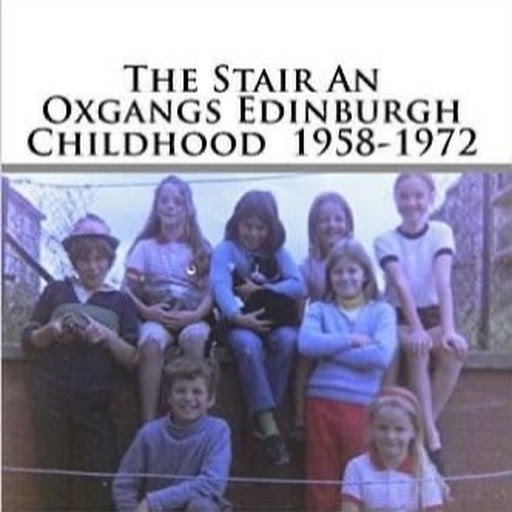
There were twenty four children living at The Stair-a remarkable number, more or less a school class size. There was only one household without children, and that was 6/5, The Smiths. I wonder whether that was a conscious decision on the part of Eric and Mary?

Eric would have made a good father. He was a very pleasant and gentle man. I always picture him wearing a white shirt, open neck and grey trousers. Of an evening he often sat at his sitting room window watching the local boys play football in the back field. He was also the only local man who ever occasionally ventured out to join in and play football with the kids-I quite admired him for doing that. It was only for a short time and as mentioned I recall him pulling a hamstring; that was perhaps his swan-song. When Eric sat at his window watching the boys play, did he reflect upon or regret not having children himself?

His wife, Mary, was quite a fragile lady and I think was unfortunately troubled by her 'nerves'. She was slim and had dark hair-I may be wrong but I seem to recall her having dark shadows under her eyes, possibly because she didn't sleep well. Someone said to me that at one time she didn't sleep for a whole year-clearly she mustn't have been related to Rip Van Winkle. If that was true it must have been hellish for both of them.

They were a quiet couple,and in many ways, were perhaps unsuited to living in The Stair with seven lively families who had children. For a while they had a dog who was a bit temperamental-as Douglas Blades rushed down the stairs shouting 'Neeep!' it barked furiously, probably to Dougie's delight!

We didn't see a lot of Mary Smith as she seemed to stay indoors for much of the time. I think most of the responsibilities fell upon Eric, whether it was buying the messages or other tasks-I know Anne Hoffmann felt quite sympathetic toward him. He was employed in basic jobs, at one time he may have been a postman. I think he was probably pleased when he got a secure job at Marks and Spencer as an storeman. He was a modest sort of a chap. I think they were quite close to Hilda and Charlie Hanlon and on good terms with Helen Blades. I don't recall them being religious at all.

They seemed to live a quiet life and Eric's raison d'etre was to look after Mary as best as he could.

Thursday, 30 August 2012

An Act of Kindness


A popular picnic was to the Braid Hills-I might struggle to find it today, but there was a very shallow open cave where we would eat our picnic-if the weather turned sour it gave us some shelter too. It served as a good base from which to play. Sometimes we would venture further to the Elfin Pond on the private Mortonhall Golf Course to collect frogs.


On one occasion a group of us were setting out for a picnic-all that Iain and I had was a bottle of water each which I'd stored in my small brown haversack. All the others had sandwiches and perhaps a few sweets. I don't know how, but Hilda Hanlon somehow must have noticed this-she leaned out her window and threw down a tanner-three-pence each-and told us to get something at Jimmy's Green Van which was parked outside the stair.


 I bought us two packets of Golden Wonder crisps.

'An Act of Kindness' (Peter Hoffmann, 2008)
Or, was it Smiths?


Great blog Peter evokes many memories I especially remember the mini Olympics you used to organise and we would run between the lamposts and you would time us happy days
Ruth Blades
Great to hear from you Ruth-thanks for the prompt-definitely a future blog item! For years I had a wee notebook with all the times as well as triple jump on the small grass area across the road.Later on we held a couple of mini-Olympics at the army track at Redford Baracks-second one not completed because we got chased off by the soldiers! Peter Hoffmann