Comments

'And finally, not everyone’s being doing topical. In fact, here’s the rather lovely 6 Oxgangs Avenue devoted to the history of the development of the area, this week highlighting how the block of flats came into being. Could have been prompted by Who do you think you are? Or just a timely reminder that not everything worth blogging about is in the here and now.'

Kate Higgins, Scottish Roundup 26/08/2012


Showing posts with label Swansons Hoffmanns Stewarts Hoggs Smiths Blades Hanlons Duffys. Show all posts

Monday, 31 December 2012

I May As Well Try And Catch The Wind-Signing Off And Final Thoughts From The Stair

This blog feels rather like the last page of the Oor Wullie annuals when he signs off-Wee Wullie sitting on his bucket contemplating, philosophically on the Auld Year as it draws to a close and then cheerily wishing all his readers all the best for the New Year ahead.


Serendipity, perhaps, but  it feels appropriate to be signing off from the blog on Auld Year's Night allowing the followers and me too, to move on to pastures new. There's no handing over of the torch however-it's just occurred to me that an interesting twist on such blogs would be if the role of 'editor' passed on Olympic Torch like to others!

On a recent response to Ruth Kaye (Blades)-the most ardent supporter of the blog, we mentioned that it had been slightly disappointing not to have received more feedback from those still alive of the 'original cast of forty one'; however, including my responses to comments there's actually approximately 10,000 words. Because they disappeared off the side bar, for the sake of completion I will pull them all together and post them as a Comments blog later in the week.

The blog will continue to exist on the net for any current readers to revisit or for those who may stumble upon its existence by happen-stance in future-it may even become a useful resource for children doing a project on life at The Stairs half a century ago.

I'd like to thank everyone who has taken the trouble to make contributions since I started the blog in the summer-either through the Comments button or who I have spoken to. In particular I'd like to mention Ruth Kaye (Blades), Liz Blades and Iain Hoffmann. There's nothing like a comment, a reaction or a response winging its way through the ether to raise the author's spirits!

I will probably do a blog sometime in the New Year giving a succinct update on Where Are They Now-I'm short on material on the likes of The Duffys; The Smiths; The Hoggs; Norman Stewart and Alison Blades.


I've tried to paint a picture or to give a flavour of what life was like at an atypical Stair in the years between 1958 and 1972, but to quote Donovan's 1965 hit I may as well have tried to Catch The Wind. I haven't quite managed to capture life there-perhaps because I haven't deployed a more thoughtful, intellectual, methodical or chronological approach to it. Instead I've largely gone on instinct-I've tried to present or tell the story through little vignettes that I trusted would be local, but also have some universal appeal too. And yet, I've not really captured what day to day life was really like for the sixteen adults and the twenty five children who lived at 6 Oxgangs Avenue over these fourteen years or so. Indeed, I haven't even captured the sights, the sounds and the smells of the days-I've not even mentioned the smell of chips wafting down the landings as Mrs Hilda Hanlon cooked dinner for Mr Charlie Hanlon and her darling boys Michael, Boo-Boo, Colin and Alan-never mind an atypical day-A Life in the Day of The Stair.


Also I haven't managed to convey the enormous changes that subtly and then more quickly impacted upon us all, because the decade of the 1960s produced perhaps the biggest changes socially, culturally and technologically of any decade-certainly if I'd continued into 2013 I would have written about the likes of Neil Armstrong and the moon landings which feature prominently in old diaries. There are some excellent academic books out there including two works that I have at home by Dominic Sandbrook, but perhaps even to my surprise I've avoided even referring to them opting to take a more folksy approach and to try to see things from the eyes of a boy and a youth-thus the absence of areas such as politics which dominate my day to day interest now. I rarely referred to my journals until quite late on which is a mistake-they are thorough, honest, timeous and immediate snapshots.

It's been an interesting experience writing day in and day out-it's given me an insight into what life is like for some journalists. On many occasions I've thought, What the hell are you doing Peter and on other fleeting occasions I've thought, Yes, this is worthwhile-it's recording times past before particular experiences vanish and disappear for ever. Also hearing from the likes of David Lines, Douglas Blades, Ruth Kaye (Blades) and Liz Blades alone has made it worthwhile.

I would have liked to have heard from others and the wealth of experiences that they could have brought to the table because too much of the story was me, me, me-I had subconsciously hoped for a dialogue-a conversation and the blog would have been so much better if it had consisted of more input from those other residents at The Stair-more of their story, their adventures-how they saw, viewed and interpreted life at The Stair-but of course it's still not too late for anyone to add future comments if the whim takes them, for as long as the blog exists on the net, others can continue to add their story too.


When I started the blog around two hundred episodes ago I said that I was taking more of an instinctive rather than an intellectual approach. It's thus begun and ended in the same way. Because of the approach taken there's no objective idea or measure as to whether it's been a success or a failure-in management speak no SMART objectives were set so there are no performance indicators. There's a part of me that perhaps hoped it might take wings and fly, but without knowing how and to where.

I feel that where the blog did take off to give a much more interesting take on The Stair is some of the on-line discussions and dialogue that I've enjoyed with Liz Blades who lives today in Melbourne, Australia. These gave some insights into some of the darker aspects of life back then as well as taking the conversation into unexpected detours adding in new information and re-awakening seemingly lost or forgotten memories. If there had been many more of these dialogues then the blog would have improved immeasurably, because people could have sparked off one another.

Some interesting themes have surfaced-The Elephant in the Room whereby two of the eight families had alcoholics as the head of the household; life through a child's eyes rather than an adult's; slips of memory; freedom and autonomy; hard work; fun; a general malaise of the importance of promoting a positive academic sensibility; a good, healthy place to live compared to the pre-war generations; values; lifestyle; interesting personalities and interesting families; entrepreneurship; relationships giving way to transactions; a time of stability and yet paradoxically a period of great change; transition; the celebration of the seasons; friendship and companionship; stable employment; and the advancement in technology  We were lucky too whether at a micro level enjoying the golden age of comics to the macro because we enjoyed and benefited from everything that Bevan instigated in 1947 in terms of new housing, new schools and the NHS. And from a personal angle it's given me a better insight into my father-many colourful tales of his adventures which will never see the light of day!

Finally to all those individuals who lived at The Stair-grew up, grew old and to those who have long since died from those days-many of them very happy indeed could I say thank you for the years at The Stair. When I think of these times it is with great affection for all my fellow travellers and whilst not all of the experiences were good they influenced the people we became and continue to be.

Could I apologise if I've inadvertently upset either you or those close to you-I've undoubtedly been clumsy or somewhat thoughtless on occasion.

Once again a big thank you too, to all the contributors to the blog and also all those anonymous followers too-ironically over the past few days the blog's been getting 250 hits or so a day!

I will visit the blog regularly in case anyone leaves any comments in future-I would be delighted to hear from anyone; indeed, because it still has the potential to be a live forum, anyone can still add their own comments, their stories and their tales of life at The Stair as they see fit or when the motivation takes them. And although it's no longer alive, yet it isn't dead either-and of course those readers who have followed the blog since it started will know that I enjoy these little quirks and paradoxes, not to mention the titles-was Adolf Hitler Kept Me Out Of... either the best or the worst of such examples!

Take care; keep busy; look after your health; and good luck in all your adventures-one of mine may be to edit the 90,000 words of The Stair!

Peter Hoffmann
peter.hoffmann@btinternet.com
Twitter: @thehoffster
Mobile: 07799 673290
'd'Artagnan' (Tom Hoffmann) is on Facebook and would communicate any messages to me too.


ps Look out for my Edinburgh coffee and cakes invites!


Tuesday, 25 December 2012

Christmas Day

Christmas Day was always the best day of the year. We always spent the whole day at our grandparents’ home at Durham Road, Portobello. I therefore have no knowledge of how The Swansons; The Stewarts; The Hoggs; The Smiths; The Blades; The Hanlons; or The Duffys spent their Christmas Day.

Christmas Day is always a popular church day. Perhaps the Swansons may have attended Colinton Mains Parish Church of Scotland; The Blades one of the Baptist churches; whilst The Duffys probably celebrated at St Marks RC Church.

The drive from Oxgangs to Portobello from The Stair was always the quietest of the whole year. Sundays were normally quiet, but on Christmas Day there were few other cars on the road and we just sailed down as if we were the Royal Family.

Grandma Jo; Aunt Heather; and the author, Gleneagles Hotel, 1985
It was our grandmother who made Christmas the day that it was. She would be there to greet us in the hallway and we would give her a formal light kiss on the cheek. Although she loved us all very dearly, she wasn't one to be effusive, instead expressing her great love for others with innumerable acts of kindness to the family and many others throughout the decades.

The hall looked resplendent-there would be a flower arrangement and the royal blue carpet had been hovered clean. As a busy artist, jeweller, pottery decorator, lace-woman and gardener our grandmother didn't want to be remembered for dusting the house-she had more important priorities. And, because her house resembled the ‘Old Curiosity Shop’, full of fascinating antiques and interesting items from throughout the world, the hall didn't need any Christmas décor. Although, I suppose one could have hung some tinsel from the African buffalo's antlers high on one wall! I lived there from the winter of 1972; whenever I invited a friend, a colleague or a journalist into the front room, their first comment on entering was always ‘What a fascinating room this is!’


Apart from the tiny kitchen her house was perfect to host the large Christmas gatherings which took place there for over half a century. The hatch linking the kitchen to the sitting room was a clever little idea. As the kitchen had no work space or work tops at all the Buchan's pottery casseroles containing hot vegetables were delicately placed and balanced on top of the washing machine. Grandma Jo had the most wonderful grace under pressure-I never saw her get flustered. Indeed when I think about it I never recall her raising her voice in all the subsequent years that I stayed with her. The only hint of colourful language emanating from the kitchen would be from my father whipping the cream by hand. Our grandmother served up those wonderful Christmas dinners through the magic little hatch, year in and year out, until well into her eighties, when I took over hosting Christmas as the Laird 'O Plewlands; then at West Mill, Colinton; and for a few years at Moorlands, Dingwall.

Anne Duncan (Hoffmann); John Duncan; Anne Hoffmann Junior; Iain Hoffmann; Peter Hoffmann; Willie Robertson

The first course was usually home-made soup. This was followed by the traditional roast turkey; mashed and roasted potatoes; various vegetables; and two types of stuffing-sage and onion and sausage-meat, with gravy. Despite being a butcher, our grandfather didn’t carve the bird, which was left to our grandmother too.

The table was lovely to behold. With the eye of the trained artist the table was laid out with colourful antiques and glassware. It looked like something out of a Dickens novel. There would also be beer, lemonade and as we children got older, the excitement of having some Woodpeckers Cider too.

Around the table the craic was good-some teasing-some wit-some awful jokes-pulling crackers and several of us all cajoling our grandmother ‘Come on through Josephine and enjoy your dinner too!’ Atypically, she was always the last to join us.

There were various pudding-trifles, a mix of milk and water jellies and single, double and whipped cream. Some of us would go outside into the winter air and stroll around the back garden before we could face our pudding. She always made a home-made Christmas plum pudding and the children would ‘ooh and ahh’ when the brandy was poured on top of it and lit. The flame puffed up almost taking one's eyebrows off. To accompany the pudding there was both custard and ice cream, the latter coming from either the wonderful Arcari's or Lucas Italian ice cream shops.

Because of the number of people at the table-the very young; the young; adults; the middle aged; the old; and the very old, these occasions were quite magical throughout the 1960s. Sometimes there would be a dozen or so present. Was it Old Aunt Mary or our great-grandmother, Wee Nana, who always said ‘Now, Josephine...where's the silver spoon...you know I can't eat my pudding without it!’ 

‘Wee Nana’ and Anne Hoffmann Junior, circa 1962

And of course I've mentioned how ‘The Miser’ aka Pumpa (great-grandfather) tried to slip me a penny, which I turned down. The age range of those sitting around the table covered approximately ninety years, therefore stretching back to when Queen Victoria was on the throne.

Iain, Anne and Peter Hoffmann
Once Christmas Dinner was over and before the Queen came on the television, people would retire to various rooms throughout the house to allow their food to digest. Our mother would enjoy a snooze in one of the bedrooms-usually my grandmother’s south facing room, which always had a very comforting and quiet feel to it. Aunt Heather would be in the kitchen with her sleeves rolled up washing dishes in the sink, often with our father giving her a hand. Others would find a spot on a spare sofa, put their feet up and place their head on a soft cushion and shortly be happily asleep. We children might go out to the garden for a while. It was good to come out from the warmth of the house with Iain and in to the fresh cold air in the winter garden. We enjoyed having a blether about our presents or to kick a ball around. In its bare winter December state the garden had a completely different feel to July when it was lush and adorned in its summer clothes. In its hibernated state all that remained were the skeletons and structures of trees, hedges and shrubs. As the afternoon coolness descended and the light quickly began to disappear, I enjoyed the quiet and solitude of the garden and the slightly brooding presence of the season. All that separated the light from the dark, the cold from the warmth, was a solitary door. It made me think of some lines from Buchan’s The Power-House where the hero, Sir Edward Leithen is told: ‘You think that a wall as solid as the earth separates civilisation from barbarism. I tell you the division is a thread, a sheet of glass. A touch here, a push there, and you bring back the reign of Saturn.’ And then, it was braw to go back into the warmth of the house and the bosom of the family and to be reminded yet again, that it was still Christmas Day!


After the Queen's broadcast, a highlight for me was to sit quietly in the Smoking Room at the front of the house. This was the front room, which was a fascinating room to be in because it was full of antiques, paintings, glassware, snuff bottles and old French clocks. I sat on the big old sofa alongside my grandfather, whilst my great grandfather and father sat on the large squishy chairs. There was a large old gramophone come radio cabinet in the corner and a Christmas tree in the bay window. It was here that the men retired to enjoy the home-made sweets which our grandmother made annually for Christmas-marzipan and walnuts, peppermint creams; fudge et al. Most of all I liked when the men enjoyed a cigar. I loved the smell of the cigar smoke. It’s a smell which immediately transports me back through the mists of time.


I loved sitting quietly, listening to my great-grandfather, grandfather and father talking and conversing. I always kept very quiet and tried not to be intrusive in case I wasn't allowed to stay. And, as the light outside slowly began to fade and darkness fell and the street-lights flickered on outside and then we switched the Christmas tree lights on. The lights were a novelty as we didn’t have them back at The Stair at 6/2 Oxgangs Avenue. In that room, surrounded by three older generations, I felt part of a line going back to Victorian times.  I also felt warm, secure and at peace. I didn't want these moments to end and savoured the hour or two before someone would look around the door to say that ‘Tea was now being served up and would the men come through and join the rest of the party.’


We'd all trot through to enjoy some fresh cut bread, salad and John West salmon which was a luxury item in the 1960s. There would also be a variety of shortbread, Christmas cake, mincemeat pies and for the gutsy perhaps seconds of trifle and cream.


By then a good fire was blazing in the grate and one of the nice things about Christmas Day, compared to our Sunday visitations, was that we got to stay on a little longer into the evening. Our grandfather would give our great-grandparents a lift back home to London Road, Dalkeith, before then returning the seven or so miles back to Portobello to give the Hoffmanns a lift back home to Oxgangs Avenue and The Stair. It was of course a stark contrast coming home to 6/2. The house was quiet. It was cold, but slightly more inviting than usual, because the Christmas tree decorated the corner of the living room and we had the pleasure of going back to our presents.

Monday, 29 October 2012

Social Relationships at The Stair

Generally social relationships could be neatly divided up-adults and children.

The Stair 6 Oxgangs Avenue
For the most part of the decade of the 1960s, The Stair was a very pleasant place to stay. Although it was a decade of incredible change and liberation compared to any decade before or since, what didn't change was that there was an underlying respect by, for and between the eight families.

Each family realised that they had to live together in the one building and by and large everyone was generally considerate, within certain parameters. I guess at a subconsciousness level Game Theory with its management of conflict and cooperation was being played out.

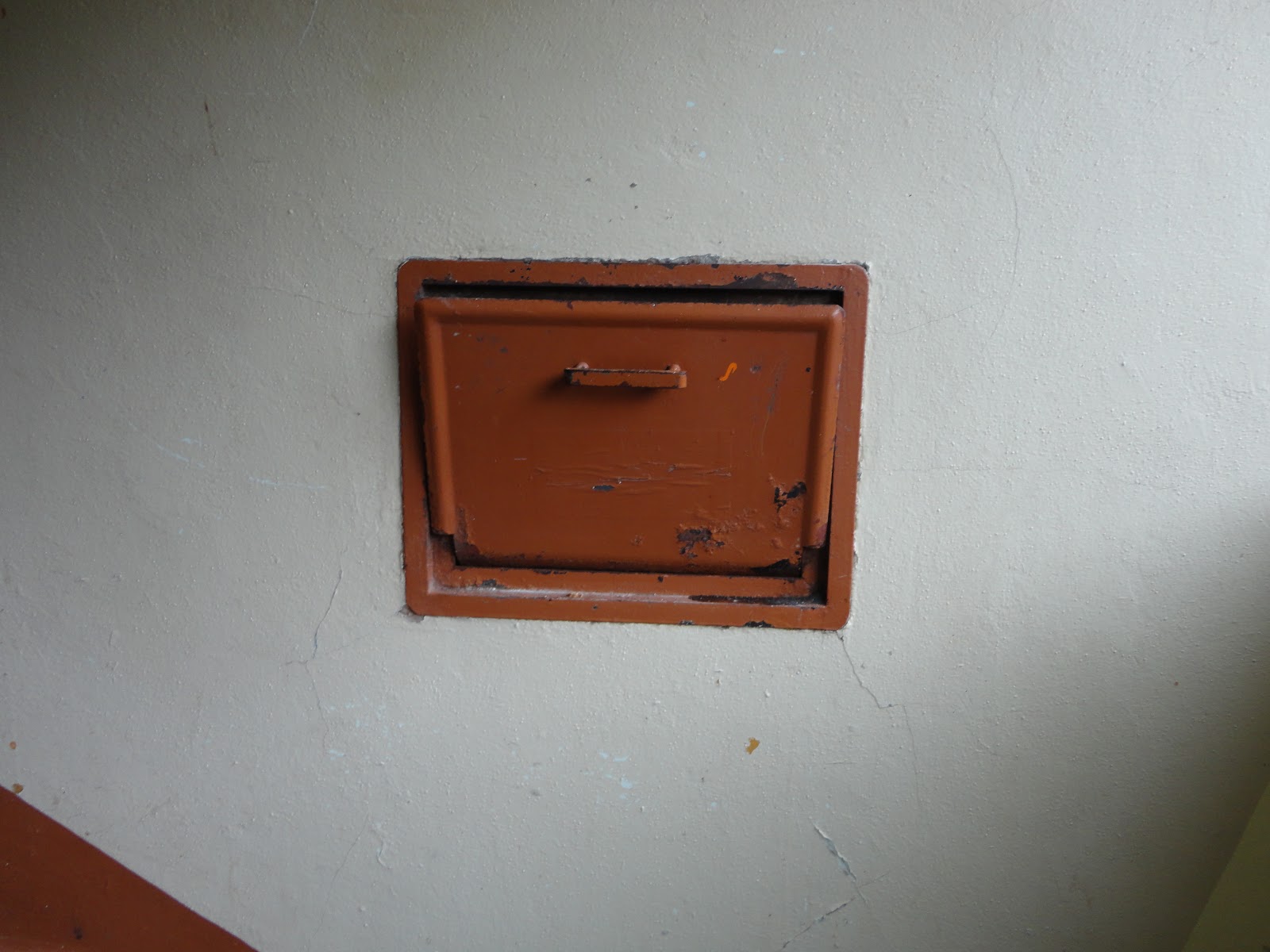
Any niggles were very small beer-the extent of which was that perhaps the worst sin committed was blocking the chute. If a family managed to block the chute there would be grumblings because it meant that waste and rubbish would build up in each flat-no joke if like the Blades at 6/6 there were as many as ten members of the family living in the household.


Noise was kept to a minimum, particularly in the evening. Any semi-fractious situations might be caused by children-me playing knock door run on Dougal Swanson's front door was counter productive and immature-Dougal gave such a great chase though, that I kept being drawn back to doing it-I can still experience the thrill!

Social relationships were generally kept at arms length between most of the adults-exchanging pleasantries as  they passed one another inside The Stair or perhaps on a bus. Out-with the Duffys and the Hanlons (in later years) the adults tended not to socialise with one another. In the 1970s and beyond I think the Hanlons and the Duffys belonged to a social club where they went on a Saturday evening?

None of the men from The Stair went out for a pint together-The Good Companions pub wasn't The Rovers Return. 

Certainly there were no such things as being invited round for dinner to experience the decade's standard fare of prawn cocktail; gammon and pineapple; and Black Forest gateaux!

As ever, the women of The Stair were more sociable than the men. That's common as a generality, but at The Stair there were also perhaps specific reasons for this, because the men were quite different.

Charlie Hanlon (6/7) and Eric Smith (6/5) were friendly-both were non-skilled workers; Mr Duffy was at one stage a salesman (?) before having to settle for more menial work; again he was friendly with Charlie Hanlon.

As mentioned Charles Blades had trained as a doctor before dropping out and as the son of Lord Blades was an oddity in The Stair so to an extent was a fish out of water-to me he always seemed remote and I don't recall ever speaking to him, but my mother, Anne Hoffmann spoke warmly of him.

George Hogg was the one skilled tradesman in The Stair but always seemed a very quiet man who was either working or at home-he's quite a phantom in my memory bank! Again, as mentioned, by nature of work as a policeman, but also by dint of personality and incline, Mr Stewart kept himself to himself as the saying goes.

Dougal Swanson was a real family man who spent most of his leisure time with his family and would never have considered going out for a pint-like Charles Blades, George Hogg and Mr Stewart, Dougal didn't socialise whatsoever. As a grocer's shop worker, albeit possibly the manager(?) he was at one level the same social class as many others, but he may have regarded himself as being of a different class and having little in common.

Ken Hoffmann was another oddity, who had next to nothing to do with the other men in The Stair. I suspect he wasn't popular at all-at that time, rather sadly, we kids didn't like him so I don't think anyone else could have thought differently. I see him back then as being serious and grumpy-amongst his peers, there was perhaps a grudging respect-he wasn't someone to mess with! And yet as a keen sportsman playing cricket and rugby he was clearly very sociable-indeed there were a few Saturday evenings when he turned up with the whole of the cricket team!

To an extent, like Charles Blades, if it hadn't been for his alcoholism, things would have worked out differently-he would have been a captain on a Ben Line ship and we would have lived in a middle class area in Edinburgh. Anne Hoffmann was different too, being the only woman who had gone into further education having been at Edinburgh University in the early 1950s. Women straddle different worlds better than men, so. although there might be Latin textbooks or stories of the Greek Tragedies on the bookshelves, being a young mother trumped everything, creating a shared sensibility amongst the women of The Stair.

The seasons and the weather had an influence-when the sun came out, then Helen Blades came out-there's a nice correlation there! Helen loved the sun and grabbed any opportunity to sun-bathe and get a little colour.

Peter; Anne Junior; Anne; and Iain Hoffmann
6/2 Oxgangs Avenue back garden suntrap
(circa summer, 1962)
At the rear of 6 Oxgangs Avenue our back garden was a sun-trap and was of course quiet compared to the front of the building which was north facing, with the road, vehicles and passers-by. Helen Blades; Marion Dibley (4/4) and Anne Hoffmann would often sit out in the garden on chairs or blankets with their backs to the shed wall and the sun on their faces, enjoy a cigarette and blether away-as Anne Hoffmann says who could ever forget Helen's marvellous, deep throaty, laughter. Anne and Helen were quite friendly, but with young families usually always too busy to spend much time together. We children often sat around to listen in-I can certainly recall the likes of Liz Blades sitting out too; after a while I'd get restless and go off and run around.

Helen Blades
Anne Hoffmann was also on friendly cordial terms with Molly and Dougal Swanson, but more at the level of having a blether if they met on the ground floor; out-with that it would only for important, serious or emergencies issues that Anne would knock on their door.

Looking back, it was more of an arms length social relationship culture which evolved-it wasn't one of the oft spoken types, of borrowing some sugar or milk from one's neighbours, but neither was it one often spoken of in the 21st Century, where one didn't know one's neighbours. I think there was a nice balance there which was effective-I also think it was broadly similar to The Stairs at numbers 2, 4 and 8 Oxgangs Avenue and beyond.