Comments

'And finally, not everyone’s being doing topical. In fact, here’s the rather lovely 6 Oxgangs Avenue devoted to the history of the development of the area, this week highlighting how the block of flats came into being. Could have been prompted by Who do you think you are? Or just a timely reminder that not everything worth blogging about is in the here and now.'

Kate Higgins, Scottish Roundup 26/08/2012


Showing posts with label Helen Blades. Show all posts

Wednesday, 6 February 2013

NEEEP!-Bonus Post From Douglas Blades On Bus Crash At Oxgangs!


Peter,

Looked at BLOG tonight. Front page was Aug 2012 and mentioning the bus which toppled over. It was Leyand PD3 with Alexander body and reg ASC 655B. Here’s a photo of it on another service on the front cover of Buses magazine.


I'm fairly certain (and George Upstairs has confirmed so) that this is off the ECT Leyland PD3/6 Alexanders double deck 655 (ASC 655B) bus that came a cropper at Oxgangs on Wednesday June 18 1975 when it fell over one day and was subsequently scrapped. I have memories of finding the hulk in Shrubhill Works and managing to acquire this. Mind you someone with a fleet body list for Edinburgh should be able to verify it. The serial number is E/1/3463/5. Alexanders were for many years in the 1960s to the 1980s the coach-builder of choice for Edinburgh-based up the road in Falkirk they are of course, still in business.

As for the accident I have the Edinburgh Evening News for the day-and nine were hurt in the accident-a lorry hit the bus as it turned right from Oxgangs Road North and Oxgangs Avenue.

From George Upstairs: So you're right Mike. Also, see the beast itself.


Comment From Circle1939: It wasn't actually the accident which resulted in 655 being scrapped. The crane sent out to get the bus managed to distort its offside doing so and that was enough to put 655 off the road for good.

I have two angles on the bus story. Our father, Charles Blades, was shaving at the side window in the large bedroom and that window looked out towards the junction – I wasn't in at the time but the story was related later – when he  exclaimed to our mother, Helen, that bus is toppling over – or words to that effect!

I think I was away to work at the Transport Dept by the time it happened but Mike Ashworth is correct, they did make a mess of getting it back up again so it had to be written off. I too visited the remains in Shrubhill after the event. The engineers had coincidentally just been considering having an exercise in raising a toppled decker when this happened. Normally they would bolt a large iron upright bar to the two upper hubs and perhaps drive a couple of large metal pins against the wheels on the ground to stop the thing slipping. Well, whatever they did they couldn't raise it hence the crane and infliction of terminal damage!

And as you can see from above – someone managed to retain the body plate a souvenir!

Douglas

Thursday, 1 November 2012

Charles; Ken; and Magwitch!

A bit like my extended response to David Lines, I realised once again, that this was going to be far too long a response for a comment-so here goes, a blog instead!

Hi Liz-nice to hear from you once again-it is a rather lovely, if poignant thought about Helen-she would have been perfectly suited to Oz, not only because of the sun, but because she was such a hard worker and such an engaging and outgoing personality-she would have positively thrived there!

It was at Helen's funeral that many of us last met up. I note from my diary of Tuesday, 24 October, 1978... We all went to Helen Blades' funeral service at Charlotte Chapel and after the burial we went to Liz's house for a tea. Very sad circumstances, but it was lovely to see Douglas and all the girls again, reminding me of many happy old times...


Helen Blades cleaning The Stair-An appropriate photo given she rarely stopped working-but still smiling!
(Photograph by Douglas Blades)

I met Douglas for an hour earlier this evening (he looks very well you will be glad to hear!) and although we were flitting around a vast number of topics (goodness knows what the waitress thought, especially my Robert Bond, (2/8) story!), his and my  memories of Charles and Ken coincide. It is very sad for all involved because both the fathers and children were losers, not to mention the wives too.

Anne Hoffmann is a fount of stories and was very friendly and terribly fond of Helen; you're right, I think she and Helen were a mutual support group. Whilst, she had an ambivalent relationship with Charles, partly because he wasn't pleased when Anne had to intervene and support Helen on one difficult occasion, she did like Charles. They used to sit beside each other on the number 4 bus in the morning travelling to work.

I had forgotten about Lady Blades' car, but I now have a vague memory of it-what an extraordinary juxtaposition! I wonder if I offered to look after it for a couple of bob to prevent the wheels being removed! There would certainly have been no trouble parking it as cars were as scarce as hens' teeth!

When Ken was drinking it really was a nightmare-quite frightening for a child-there are endless tales! Unfortunately, he seemed to take against me and I often took the brunt of it-I've still got the mental scars if not the physical ones!

Ironically, whilst his behaviour was understandable when he was on the bottle, what is less understandable is how he behaved when he was sober. For much of the time, his was a brooding, grumpy, disputatious and menacing presence. He took no pleasure or interest in having two sons, but did have a warmer relationship with my sister Anne. That said, I loved to sit and listen to him and my mother, Anne Hoffmann, converse over our Sunday breakfast of tea and rolls-their conversation was of a really high quality punctuated with many laughs!

He did battle his alcoholism hard by attending AA at The Rooms at Cockburn Street for years and years. I have occasionally tried to understand Ken through vividly re-imagining  his upbringing (a phenomenological approach?)  at 14 Dean Park Street, Stockbridge in the late 1920s and 1930s and with the type of parents that he had.

That gives me certain clues, in that he was certainly a child of his times; but whilst it partly explains who he was, ultimately, if you are an intelligent and reflective individual, it is probably not enough of an excuse. As a husband and father he failed to get to grips to try to overcome particular personality traits and weaknesses. And, whilst Dr Spock manuals on rearing children weren't exactly dotted around, I don't think he ever gave his demeanour and behaviour much thought-for example I don't recall receiving any real praise from him-it was the stick rather than the carrot!

A Rare Outing to Edinburgh Zoo
Iain; Ken; Anne; and Peter Hoffmann (circa 1964)
I'm sorry that your memories are not better. I/we at least had the consolation of getting on better with Ken in later years after my parents had divorced on my 15th birthday in 1971! I would often bump into him on early autumn afternoons at Boroughmuir rugby matches at Meggetland and later on when I stayed at Colinton Village in the late 1980s/1990s he used to sneak round to join the whole extended family for Chinese Carry Outs/Trivial Pursuits evenings which were very happy occasions-by then he was able to enjoy and appreciate us all-even my grandmother! By then I think he probably had many regrets on how life might have been.

Although I bore the brunt of his wrath I have only ever felt warmly toward him after he left home. I intend to do some future blogs on the topic of foreign letters-(it was you and Fifi! who introduced me to a New York pen pal!)-I am lucky to have a dozen or so letters from Ken from  throughout the world from 1971 to around 1980-I have not looked at them for years but when I did a decade ago I was completely, but pleasantly surprised to see he did actually care for me, and in his way tried looking after me from afar, Magwitch style, with some well meaning advice.

And, because he was so keen on sport I think it came as a pleasant surprise to him that I had done something-there is a 1976 telegram addressed to the Olympic Village, Montreal-he heard of my selection on the BBC World Service whilst on board a ship off the coast of South Africa; also, I was incredibly surprised to see he had watched an 1978 Edmonton Commonwealth Games semi-final whilst in a pub in Oz!

A last and very late memory of him from just before he died over twenty years ago-we were down at Meggetland-Iain and me, plus his son Roddy (from his second marriage)-he was treating the three of us to a Boroughmuir Rugby jersey-we had to hang around for quarter of an hour before they handed them out to us-despite his poor health the four of us passed the time by throwing and passing a rugby ball to one another-it was great fun with much laughter and leg pulling-extraordinarily it was something we had never done as children-I think he knew in that moment what he had missed-for me it's an abiding memory and drew a veil over much that had gone before.


Apart from his Boroughmuir tie, the jersey is all I inherited from him-it's worn so well that my son, Will wears it today. Whilst it may be a perverse observation I sometimes reflect on the fantastic legacy which he left me, for when I had two sons of my own, I knew exactly how I wanted to bring them up and how I wanted to spend as much time with them as possible before they would come to fly the nest!

ps Check out a rather lovely track, My Old Man by Steve Goodman!

http://www.youtube.com/watch?v=GW7xR7WkyTU&feature=share&list=PLDB7718CBFA7443FF

Comment From Liz Blades: Peter, thank you for your extended comments. I was amazed to read that you all came back to my house after mummy's funeral. At first I didn't even recall that I did that, and I'm sorry that I do not remember you being there. The mind does strange things when you are under stress. 
I'm afraid mummy hated that photo of her cleaning the stair. She was embarrassed to be photographed in those particular circumstances. She would be appalled to know that it is now on the world wide web for all and sundry to view! But you can see that grin on her face all the same :)
Love the photo of you and Douglas and glad to hear it was a happy reunion.
It occurred to me that Charles and Ken grew up almost within a stone's throw of one another. I wonder if they ever encountered one another before Oxgangs? Charles grew up in India Street just around the corner from Stockbridge. Liz Blades

Response: Sorry about that Liz-it would be nice to access a better photo of Helen. I had forgotten too-I have very detailed diaries going back over forty years ago, although I have not really referred to them for the blog. Douglas too had forgotten we were at the funeral. After seeing your interesting comments last night I took the 1978 diary off the bookshelf-there is more in there. I was supposed to be in Dundee that morning for something important, but turned the car back at the Maybury Roundabout! Something I discovered fairly recently from Anne Hoffmann was that my Nana Hoffmann was the housekeeper for Lord Aitchison who was a contemporary to Lord Blades-I very much like the paintings by his artist son the late Craigie Aitchison-I enjoyed an exhibition at a recent Edinburgh Festival. I was really quite excited about meeting Douglas yesterday-although I mixed with a wide variety of the kids I always really liked and looked up to Douglas-not just because he was the oldest child at The Stair, but because he was such an interesting character-whether with his collection of records; his call-sign; his interest in transport; and the way he worked very hard-not to say he was a saint of course, because when I needed it he very occasionally told me off too! NEEEP! Peter Hoffmann

Monday, 29 October 2012

Social Relationships at The Stair

Generally social relationships could be neatly divided up-adults and children.

The Stair 6 Oxgangs Avenue
For the most part of the decade of the 1960s, The Stair was a very pleasant place to stay. Although it was a decade of incredible change and liberation compared to any decade before or since, what didn't change was that there was an underlying respect by, for and between the eight families.

Each family realised that they had to live together in the one building and by and large everyone was generally considerate, within certain parameters. I guess at a subconsciousness level Game Theory with its management of conflict and cooperation was being played out.

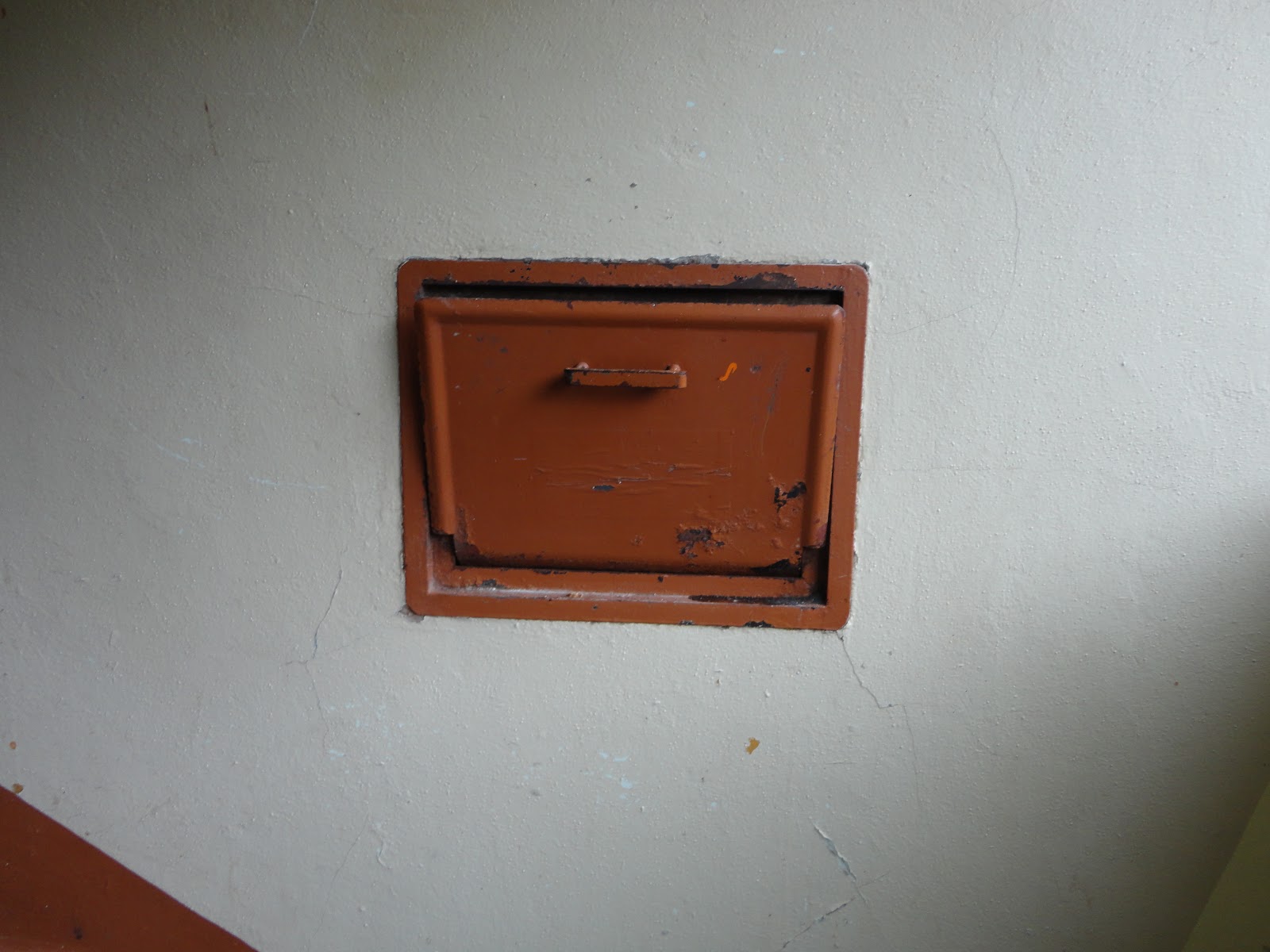
Any niggles were very small beer-the extent of which was that perhaps the worst sin committed was blocking the chute. If a family managed to block the chute there would be grumblings because it meant that waste and rubbish would build up in each flat-no joke if like the Blades at 6/6 there were as many as ten members of the family living in the household.


Noise was kept to a minimum, particularly in the evening. Any semi-fractious situations might be caused by children-me playing knock door run on Dougal Swanson's front door was counter productive and immature-Dougal gave such a great chase though, that I kept being drawn back to doing it-I can still experience the thrill!

Social relationships were generally kept at arms length between most of the adults-exchanging pleasantries as  they passed one another inside The Stair or perhaps on a bus. Out-with the Duffys and the Hanlons (in later years) the adults tended not to socialise with one another. In the 1970s and beyond I think the Hanlons and the Duffys belonged to a social club where they went on a Saturday evening?

None of the men from The Stair went out for a pint together-The Good Companions pub wasn't The Rovers Return. 

Certainly there were no such things as being invited round for dinner to experience the decade's standard fare of prawn cocktail; gammon and pineapple; and Black Forest gateaux!

As ever, the women of The Stair were more sociable than the men. That's common as a generality, but at The Stair there were also perhaps specific reasons for this, because the men were quite different.

Charlie Hanlon (6/7) and Eric Smith (6/5) were friendly-both were non-skilled workers; Mr Duffy was at one stage a salesman (?) before having to settle for more menial work; again he was friendly with Charlie Hanlon.

As mentioned Charles Blades had trained as a doctor before dropping out and as the son of Lord Blades was an oddity in The Stair so to an extent was a fish out of water-to me he always seemed remote and I don't recall ever speaking to him, but my mother, Anne Hoffmann spoke warmly of him.

George Hogg was the one skilled tradesman in The Stair but always seemed a very quiet man who was either working or at home-he's quite a phantom in my memory bank! Again, as mentioned, by nature of work as a policeman, but also by dint of personality and incline, Mr Stewart kept himself to himself as the saying goes.

Dougal Swanson was a real family man who spent most of his leisure time with his family and would never have considered going out for a pint-like Charles Blades, George Hogg and Mr Stewart, Dougal didn't socialise whatsoever. As a grocer's shop worker, albeit possibly the manager(?) he was at one level the same social class as many others, but he may have regarded himself as being of a different class and having little in common.

Ken Hoffmann was another oddity, who had next to nothing to do with the other men in The Stair. I suspect he wasn't popular at all-at that time, rather sadly, we kids didn't like him so I don't think anyone else could have thought differently. I see him back then as being serious and grumpy-amongst his peers, there was perhaps a grudging respect-he wasn't someone to mess with! And yet as a keen sportsman playing cricket and rugby he was clearly very sociable-indeed there were a few Saturday evenings when he turned up with the whole of the cricket team!

To an extent, like Charles Blades, if it hadn't been for his alcoholism, things would have worked out differently-he would have been a captain on a Ben Line ship and we would have lived in a middle class area in Edinburgh. Anne Hoffmann was different too, being the only woman who had gone into further education having been at Edinburgh University in the early 1950s. Women straddle different worlds better than men, so. although there might be Latin textbooks or stories of the Greek Tragedies on the bookshelves, being a young mother trumped everything, creating a shared sensibility amongst the women of The Stair.

The seasons and the weather had an influence-when the sun came out, then Helen Blades came out-there's a nice correlation there! Helen loved the sun and grabbed any opportunity to sun-bathe and get a little colour.

Peter; Anne Junior; Anne; and Iain Hoffmann
6/2 Oxgangs Avenue back garden suntrap
(circa summer, 1962)
At the rear of 6 Oxgangs Avenue our back garden was a sun-trap and was of course quiet compared to the front of the building which was north facing, with the road, vehicles and passers-by. Helen Blades; Marion Dibley (4/4) and Anne Hoffmann would often sit out in the garden on chairs or blankets with their backs to the shed wall and the sun on their faces, enjoy a cigarette and blether away-as Anne Hoffmann says who could ever forget Helen's marvellous, deep throaty, laughter. Anne and Helen were quite friendly, but with young families usually always too busy to spend much time together. We children often sat around to listen in-I can certainly recall the likes of Liz Blades sitting out too; after a while I'd get restless and go off and run around.

Helen Blades
Anne Hoffmann was also on friendly cordial terms with Molly and Dougal Swanson, but more at the level of having a blether if they met on the ground floor; out-with that it would only for important, serious or emergencies issues that Anne would knock on their door.

Looking back, it was more of an arms length social relationship culture which evolved-it wasn't one of the oft spoken types, of borrowing some sugar or milk from one's neighbours, but neither was it one often spoken of in the 21st Century, where one didn't know one's neighbours. I think there was a nice balance there which was effective-I also think it was broadly similar to The Stairs at numbers 2, 4 and 8 Oxgangs Avenue and beyond.

Wednesday, 3 October 2012

6/5 The Smiths-Eric and Mary

6/5 The Smiths flat at The Stair (Photograph, Peter Hoffmann 2012)
There were twenty four children living at The Stair-a remarkable number, more or less a school class size. There was only one household without children, and that was 6/5, The Smiths. I wonder whether that was a conscious decision on the part of Eric and Mary?

Eric would have made a good father. He was a very pleasant and gentle man. I always picture him wearing a white shirt, open neck and grey trousers. Of an evening he often sat at his sitting room window watching the local boys play football in the back field. He was also the only local man who ever occasionally ventured out to join in and play football with the kids-I quite admired him for doing that. It was only for a short time and as mentioned I recall him pulling a hamstring; that was perhaps his swan-song. When Eric sat at his window watching the boys play, did he reflect upon or regret not having children himself?

His wife, Mary, was quite a fragile lady and I think was unfortunately troubled by her 'nerves'. She was slim and had dark hair-I may be wrong but I seem to recall her having dark shadows under her eyes, possibly because she didn't sleep well. Someone said to me that at one time she didn't sleep for a whole year-clearly she mustn't have been related to Rip Van Winkle. If that was true it must have been hellish for both of them.

They were a quiet couple,and in many ways, were perhaps unsuited to living in The Stair with seven lively families who had children. For a while they had a dog who was a bit temperamental-as Douglas Blades rushed down the stairs shouting 'Neeep!' it barked furiously, probably to Dougie's delight!

We didn't see a lot of Mary Smith as she seemed to stay indoors for much of the time. I think most of the responsibilities fell upon Eric, whether it was buying the messages or other tasks-I know Anne Hoffmann felt quite sympathetic toward him. He was employed in basic jobs, at one time he may have been a postman. I think he was probably pleased when he got a secure job at Marks and Spencer as an storeman. He was a modest sort of a chap. I think they were quite close to Hilda and Charlie Hanlon and on good terms with Helen Blades. I don't recall them being religious at all.

They seemed to live a quiet life and Eric's raison d'etre was to look after Mary as best as he could.

Friday, 17 August 2012

The Gap in the Curtain


Polygon Press 2012 edition
Living at Oxgangs is quite clear in my memory and vivid in my mind; as the cliché goes, it seems only like yesterday; however it is actually forty years since I lived there and of course some of this blog goes back fifty years ago-half a century.Because it remains in one's mind's eye and the houses remain, in a strange way, one thinks that world still exists-that one only need step through the gap in the curtain and the families and that day to day life continues to exist and that one can pick up and revert to that former way of life. However, the reality is quite different; it's later than one thinks, when one reflects on the number of mums and dads and others who headed up each household who are now dead. My father Ken Hoffmann; Molly and Dougal Swanson; Mr and Mrs Stewart; Helen and Charles Blades; and Charlie Hanlon are all individuals who I'm aware of.

In wanting to capture a flavour of that time this is certainly my story, but it may be interesting to see where the story goes especially if others contribute their stories-their memories and also to comment on the daily blogs. It’s my interpretation of life at 6 Oxgangs Avenue, the day to day, month to month, season to season and year to year life seen through the eyes of a child, a boy and then a youth, but reinterpreted through the prism of a man of fifty six years of age. 

I know from the afore-mentioned occasional exchanges between my mother, sister and brother that we will spark off one another recalling things from the past that we had either forgotten or thought we had forgotten or be given a different perspective or a surprising twist, sometimes quite different from how I had perhaps seen or viewed an individual or an event.